A channel labelled 20 × 20 × 2 mm can describe several different dimensions, and a width that fits a panel may still fail under wind, span or installation loads. By separating clear opening, wall thickness, retained material, exposure and structural duty, you can specify a channel that fits the work and can be quoted accurately.
Key takeaways
- Confirm whether dimensions mean outside width, height and wall thickness.
- Match the clear opening to the material’s actual thickness and retention needs.
- Check span, load and section type before using a U channel as a frame.
- Specify finish, expansion allowance and drainage for Mumbai outdoor installations.
Read the U channel dimensions before comparing sizes
Interpret 20 × 20 × 2 mm as a three-part description only after confirming what each number measures. Aluminium U channel sizes in mumbai are often quoted by nominal dimensions, so the same label can describe different sections.
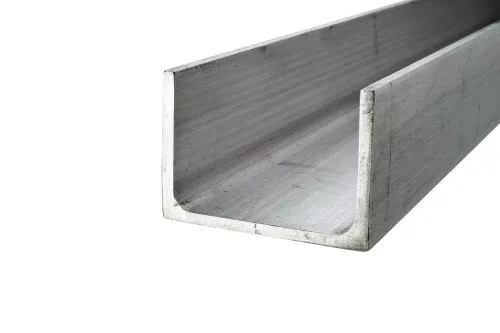
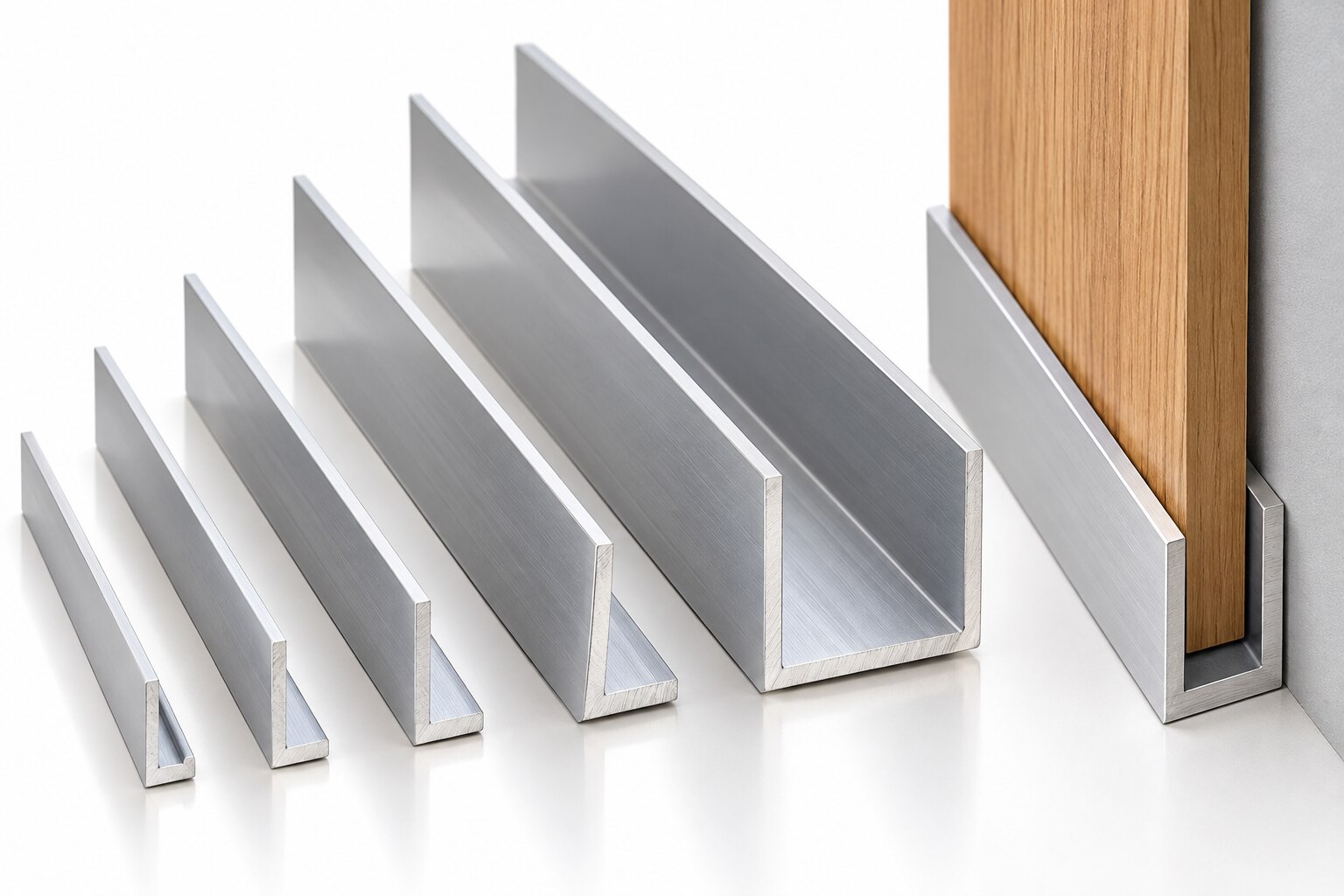
1. Ask whether the first number is the outside width or the clear internal opening. Then confirm whether the second is the outside leg height or the channel depth. A drawing with arrows is safer than a size label: it should show internal width, external width, height and both leg lengths.
2. Confirm what “2 mm” means. It may be nominal wall thickness, while the supplied extrusion has a measured minimum that varies after finishing or along the section. This difference reduces the opening and affects screw engagement, stiffness and fit around glass, sheet, ACP or a partition panel.
3. Measure the material entering the channel, then add only the clearance needed for installation, sealant and thermal movement. Do not choose aluminium channel size from the panel thickness alone; a tight channel can damage an edge, while an oversized opening lets the infill rattle or shift.
Before ordering, request the alloy and temper, stock length, straightness tolerance and a section drawing. State whether the dimensions are internal or external and whether the finish adds a specified thickness. If the channel carries a span or load, treat these dimensions as the starting point, not proof that the section is strong enough.
Match the clear opening to the material you are retaining
A channel must leave a usable clear opening after its wall thickness, gasket and retainer are accounted for. There is no single answer to which aluminium u channel size for construction in mumbai: select the opening from the retained material, then check span and fixing.
| Material | Starting clear opening to specify | Main fit check |
|---|---|---|
| Glass | Glass thickness + gasket + installation tolerance | Add setting blocks and edge protection; a 10 mm glass pane does not suit a 10 mm opening. |
| ACP | Panel thickness + sealant or edge trim clearance | Allow room for thermal movement and avoid crushing the skin at the channel lips. |
| Aluminium or steel sheet | Sheet thickness + fixing and handling clearance | Check whether screws, rivets or an insert need space inside the channel. |
| Rigid panel | Panel thickness + movement and replacement clearance | Confirm that the panel can enter without bending or damaging its face. |
| Partition infill | Infill thickness + system gasket or retainer | Match the partition manufacturer’s detail; a 50 mm nominal channel is not automatically suitable for a 50 mm partition. |
Ask for internal width, internal depth, outside width, leg height and wall thickness separately. A quotation reading “20 × 20 × 2 mm” is incomplete until the supplier confirms whether 20 mm means the outside dimension or clear opening.
For aluminium U channel for contractors, provide a section drawing or sample, plus the retained material, channel length, span, fixing centres, finish and straightness requirement. This prevents a nominally matching channel from blocking fasteners or leaving the infill loose.
Check span, load and section type before using a channel as a frame
Use a U channel as trim or retention when the infill is light, the channel is continuously supported, and the section carries little or no structural load. A 10–20 mm clear opening with 1–2 mm walls can suit partition infill, edge trim or light glazing, but not an unsupported frame by default.
1. Measure the unsupported span and identify the load path. If wind, panel weight or impact travels through the channel, treat it as a structural member rather than a finishing trim.
2. To choose aluminium channel size, calculate the clear opening around the retained glass, ACP, sheet or board, then check wall thickness and channel depth. A wider opening with thin walls can buckle or twist.
3. Check bending, local wall crippling, fastener pull-out and deflection at the proposed fixing centres. Reducing those centres, adding a backing member or increasing wall thickness often works better than selecting a wider, thin-walled channel.
4. Replace the U channel with a structural extrusion, folded aluminium section, box section or backing frame when the span is unsupported, wind pressure is significant, or the channel must resist frame loads. For exposed façades and balcony screens in Mumbai, a decorative U trim can pull out even when the panel fits.
For aluminium U channel for contractors, state the intended span, retained material, fixing spacing and load direction with the order. Include a section drawing showing clear width, outside width, height and wall thickness; “12 mm channel” alone cannot confirm strength or fit.
Specify finish and movement details for Mumbai’s outdoor conditions
Use anodising or a properly pretreated powder-coated finish for outdoor aluminium U channels; do not leave mill-finish aluminium exposed on a Mumbai façade. Monsoon water and coastal salt attack cut ends, drilled holes and scratches first, so specify edge touch-up, sealed joints and drainage rather than trapping water inside the channel.
Prevent galvanic staining at every steel/aluminium interface. Use isolating tape, EPDM gaskets, nylon washers or a compatible sealant, and keep fasteners out of stagnant salty water. Do not allow wet aluminium to touch alkaline cement mortar; separate the channel with a gasket and seal the perimeter after curing.
Thermal movement changes the fixing detail, not just the channel size. Aluminium expands by about 23 micrometres per metre per °C, so a 3-metre channel facing a 40°C design temperature change can move roughly 2.8 mm.
Use a fixed point, slotted holes or movement joints on long runs, and leave the calculated clearance at panel ends. Do not block that gap with rigid sealant.
- State anodised or powder-coated finish, colour, pretreatment and coating requirement.
- Detail sealed cut ends, drainage holes and joint locations.
- Identify the isolator between aluminium, steel, concrete and retained material.
- Specify fixed and sliding fasteners, fixing centres and movement allowance.
The phrase aluminium u channel sizes in mumbai does not identify exposure or movement. Likewise, which aluminium u channel size for construction in mumbai depends on the retained material, span and fixing detail, not a nominal width alone.
Give contractors and suppliers a complete channel schedule
Put a section drawing or physical sample on the purchase request; a label such as “20 × 20 × 2 mm” does not prove whether the first dimensions are outside or internal measurements, or whether 2 mm is nominal or minimum wall thickness.
For aluminium U channel for contractors, state:
- Clear internal opening, outside width, channel depth and wall thickness, all in millimetres
- Retained material, including its actual thickness and any gasket, setting block or insert
- Alloy and temper, such as 6063-T5, if specified by the design
- Required lengths, cut tolerance and straightness tolerance
- Finish and visible colour, such as mill finish, anodised or powder coated
- Every hole, slot, notch, mitre and drain hole, with its size and distance from each end
- Unsupported span, fixing type and fixing centres
- Installation location, exposure to rain or salt air, and the direction of loading
- Required delivery quantity, piece lengths, packing and acceptable substitutions
To choose aluminium channel size, confirm fit first, then check bending, local wall crippling, fastener pull-out and deflection for the stated span and load. A wider thin wall is not automatically stronger; a deeper section, thicker wall, closer fixings or backing member can be the safer correction.
For a quotation from Aluminium World, attach the drawing and identify which dimensions are minimums. That prevents a stock channel from arriving with a nominal opening that traps the infill or leaves insufficient edge support.
Related products
 | Aluminium Rod Usage/Application Construction Thickness standard Color Ivory, Silver Grade 1000 Series Finishing standard We are one of the coveted dealers of... View product → |
 | Aluminium Extrusions Length 12 Feet Shape Square Usage/Application Industrial Thickness standard Surface Finishing standard We, “Aluminium World” are a “Manufacturer And... View product → |
Frequently asked questions
How should you read aluminium U channel dimensions?
Confirm what each number measures before comparing sections. A label such as 20 × 20 × 2 mm usually describes width, height and wall thickness, but suppliers can quote nominal or outside dimensions differently.
How do you choose an aluminium U channel size for retained material?
Measure the material thickness and match it to the channel’s clear opening. Allow space for movement, sealant, installation tolerance and any retaining insert.
Can an aluminium U channel be used as a structural frame?
Check the span, applied load, support spacing, deflection limit and section type first. A light U channel used as trim or a retainer is not automatically suitable as a load-bearing frame.
What should contractors specify for outdoor aluminium channels in Mumbai?
State the alloy and temper, finish, channel dimensions, clear opening, cut lengths, fixing method, drainage, expansion allowance and protection against contact with dissimilar metals.
Keywords