A flat aluminium blank gives fabricators a predictable starting point for cutting, forming, joining and finishing, but the wrong alloy, temper or thickness can erase that advantage. By the end, you will be able to match sheet to the job, avoid common production failures and specify material that arrives ready for repeatable fabrication.
Key takeaways
- Use flat blanks when nesting, fixturing and inspection matter.
- Confirm whether your job needs sheet or plate before ordering.
- Match alloy and temper to bending, welding and strength requirements.
- Specify thickness, dimensions, tolerance, finish and test documents in writing.
Why a Flat Blank Often Beats Coil, Plate or Extrusion
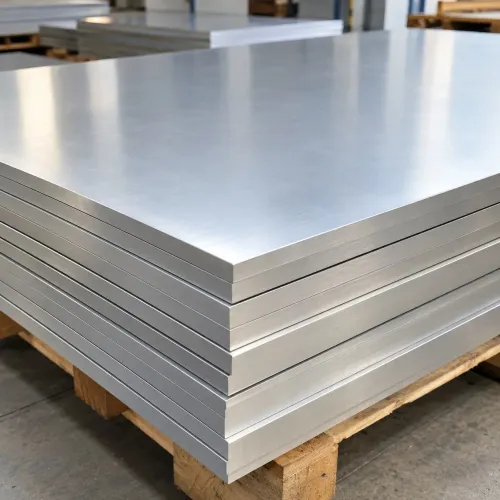
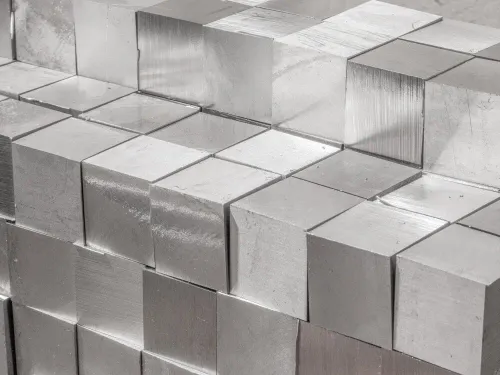
A flat aluminium sheet for industrial fabrication starts as a predictable rectangular blank. That makes CNC routing, laser cutting, punching and nesting easier than uncoiling and straightening strip, machining away an extrusion’s unwanted shape, or sawing bar into thin panels. Operators also handle, fixture and inspect individual blanks faster.
| Starting form | Why sheet often wins | When the alternative is better |
|---|---|---|
| Coil | No decoiling, levelling or coil-fed tooling; quick changeovers between parts | High-volume parts with long, continuous profiles |
| Plate | Lower mass and faster cutting for thin panels and brackets | Thick sections requiring stiffness, impact resistance or deep machining |
| Extrusion | Cuts directly from a flat surface; no custom profile or orientation constraints | Frames, rails and parts needing integral ribs or channels |
| Bar | Less waste and machining for flat parts; easier bending and joining | Shafts, pins or compact solid components |
| Steel | Lower weight and strong corrosion resistance without a coating in many environments | High-temperature, high-wear or unusually high-strength applications |
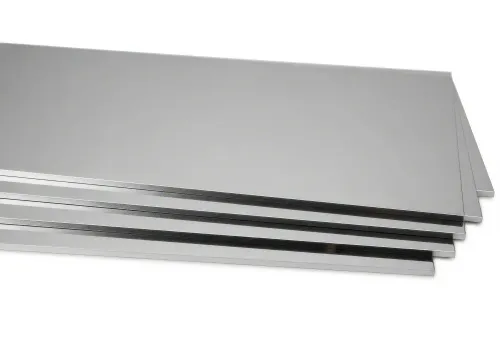
Flat aluminium sheets for fabrication also accept drilling, riveting, welding, bending and surface finishing without changing the starting geometry. A supported blank reduces vibration and distortion; consistent thickness and flatness improve hole position, bend results and repeatability across batches.
Do not judge savings from nesting alone. Include laser kerf, saw allowance, edge trim, bend allowance, protective-film limits and the supplier’s available stock sizes. Specify alloy, temper, thickness in millimetres, width, length and tolerance rather than relying on gauge.
Where Sheet Ends and Plate Begins in a Real Fabrication Job
At 6.35 mm (0.250 inch), the common standards boundary shifts from sheet to plate, but metric conventions differ by supplier. Specify thickness in millimetres, not gauge alone, and assess what the part must survive.
| Option | What it means | When it applies |
|---|---|---|
| Sheet | Below 6.35 mm; easier to cut, bend, drill, rivet and weld | Enclosures, covers, panels and formed components with supported spans and moderate loads |
| Plate | 6.35 mm and above; greater section stiffness and machining stock | Long spans, concentrated loads, exposed edges, impact or heavily machined parts |
| Thicker sheet with reinforcement | Thin material supported by ribs, folds or a frame | When low weight matters more than solid thickness |
A long panel carrying a load can need plate even when its static weight seems low; deflection, vibration and fastener pull-through often control the choice. Impact exposure also favours plate or a reinforced sheet, because a thin unsupported panel dents and oil-cans easily.
For CNC work, plate provides depth for pockets and threaded features. Thin sheet demands a fixture supporting the whole blank: otherwise vibration, heat and clamping force cause burrs, smearing and dimensional drift. Sharp, relieved tools and reliable chip evacuation protect both materials.
The flat aluminium sheet benefits are greatest when the supplied blank has consistent thickness and flatness. Put alloy, temper, measured thickness, dimensions and tolerance on the purchase order; a thicker material is not automatically the better choice if it cannot be formed or machined as planned.
How Alloy and Temper Change Bending, Welding and Strength
Choose 5052-H32 for formed panels and enclosures, 6061-T6 for higher structural or machining strength, 3003 for easily formed general-purpose parts, and 5083 when corrosion resistance and weldable strength dominate the specification. Temper changes the result as much as alloy does.
| Alloy and temper | Forming and joining behaviour | Corrosion and finished strength | Best fit |
|---|---|---|---|
| 5052-H32 | Good bending and weldability; suitable for formed shapes | Strong corrosion resistance; moderate strength | Enclosures, panels and outdoor fabrication |
| 3003 | Very readily formed and welded | Good general corrosion resistance; lower strength | Covers, ducting and general-purpose parts |
| 6061-T6 | Higher machining and structural strength; less forgiving at tight bend radii; weld heat reduces local strength | Good corrosion resistance; high starting strength | Machined brackets, frames and load-bearing parts |
| 5083 | Weldable, with forming limits set by thickness and temper | Excellent corrosion resistance and strong welded performance | Marine, chemical and demanding outdoor structures |
H tempers indicate strain-hardened, non-heat-treatable aluminium; T tempers indicate heat-treated or thermally conditioned material. A purchase order for “6061 sheet” is incomplete without the temper, because yield strength, elongation, springback and bend performance can change materially.
Ask for a mill test certificate or certificate of conformity stating alloy, temper, measured thickness, applicable standard, heat or lot number, surface condition, cut-size tolerance and flatness. Do not substitute 5052, 6061 or 3003 for a specified electrical or heat-transfer grade without engineering approval; their conductivity and thermal behaviour differ.
The flat aluminium sheet benefits appear only when the grade matches the job, and flat aluminium sheets for fabrication arrive with consistent properties.
What Thickness and Fabrication Process Do to the Finished Part
Thickness changes more than weight: it sets stiffness, bending force, bend allowance and the support needed during cutting. A flat aluminium sheet for industrial fabrication delivers repeatable parts only when the process matches the material condition.
1. Set the inside bend radius from alloy, temper, thickness, grain direction and tooling, not thickness alone. A tight radius in 6061-T6 can crack the outside surface, while 5052-H32 generally tolerates tighter forming.
2. Allow for springback after forming. Aluminium opens slightly when pressure is released, so test the first part, measure the final angle and adjust the tool angle or overbend value before running the batch.
3. Choose the cutting method around tolerance and edge condition. CNC routing suits supported blanks and thicker sections; laser cutting gives fine profiles; punching is fast for repeated holes. Include kerf, saw loss, edge trim, bend allowances and protective-film restrictions in the nesting plan.
4. Control joining heat and alignment. Welding can distort thin sheet and alter strength near the weld; riveting or bolting avoids that heat but adds holes, fasteners and access requirements.
A dull cutter or poorly supported blank creates burrs, smearing, vibration and dimensional drift. Check flatness before machining, support the full sheet, and specify measured thickness and flatness limits rather than relying on nominal size.
Protective film prevents scratches during handling, but remove it where heat, welding or adhesive bonding could trap residue or ignite it. Specify the surface finish and film compatibility before fabrication begins.
How to Specify and Compare a Flat Sheet Supplier
Choose a flat aluminium sheet supplier in Mumbai that can prove what it will deliver, not one that quotes only “aluminium sheet, 3 mm.” Your purchase order should state alloy, temper, nominal thickness, width, length, surface condition, applicable tolerance standard and cut-size tolerance.
Request these documents before approving the order:
- Mill test certificate or certificate of conformity naming the alloy, temper, nominal and measured thickness, applicable standard, heat or lot number, and surface condition.
- A dimensional inspection report recording width, length, thickness and flatness against your drawing.
- A cutting plan showing stock size, saw or laser kerf, edge trim, bend allowances and protective-film restrictions.
Compare suppliers against the same production needs:
| Measure | What to compare | Why it matters |
|---|---|---|
| Stock range | Available widths, lengths and thicknesses | Prevents wasteful joints or unsuitable nesting |
| Flatness | Stated limit and measurement method | Stops vibration, burrs and dimensional drift during CNC work |
| Cutting service | CNC routing, laser cutting or sawing; tolerance and kerf | Confirms whether finished blanks match your drawing |
| Surface protection | Film type, application and removal limits | Prevents adhesive residue or laser damage |
| Delivery control | Lot traceability and replacement process | Isolates nonconforming material quickly |
Ask Aluminium World, as you would any candidate, to confirm these points in the quotation. Reject a supplier that cannot identify the heat or lot, measured thickness or flatness result for a production-critical order.
Related products
 | Aluminium Sheets & Plates Flat Aluminum Sheets Flat Aluminum Sheets are versatile sheets used in construction, fabrication, and industrial applications. View product → |
 | Aluminium Sheet Minimum Order Quantity: 100 Kg Thickness all thickness Material Aluminium Color Silver Shape Rectangular Is It Anodised Anodised Grade 5052... View product → |
Frequently asked questions
Why choose a flat aluminium sheet for industrial fabrication?
A flat blank simplifies CNC routing, laser cutting, punching, nesting, handling, fixturing and inspection compared with coil, extrusion or bar.
Where does aluminium sheet end and plate begin?
The distinction depends on thickness and the governing specification, so confirm the material standard and ordered thickness rather than relying on the trade term alone.
How do alloy and temper affect aluminium fabrication?
Alloy and temper change strength, bendability, weld response and springback. Select them around the forming and joining process, not strength alone.
What should you include when comparing flat aluminium sheet suppliers?
State alloy, temper, thickness, dimensions, flatness, surface finish, quantity, cutting tolerance, packaging and required mill certificates or inspection records.
Related product
 | Aluminium Sheets & Plates Aluminium Sheet 5052 is a versatile alloy with excellent corrosion resistance, formability, and strength, widely used in marine, automotive, and... View product → |
Keywords